Schengen Visa Application Assessment: How Consulates Decide
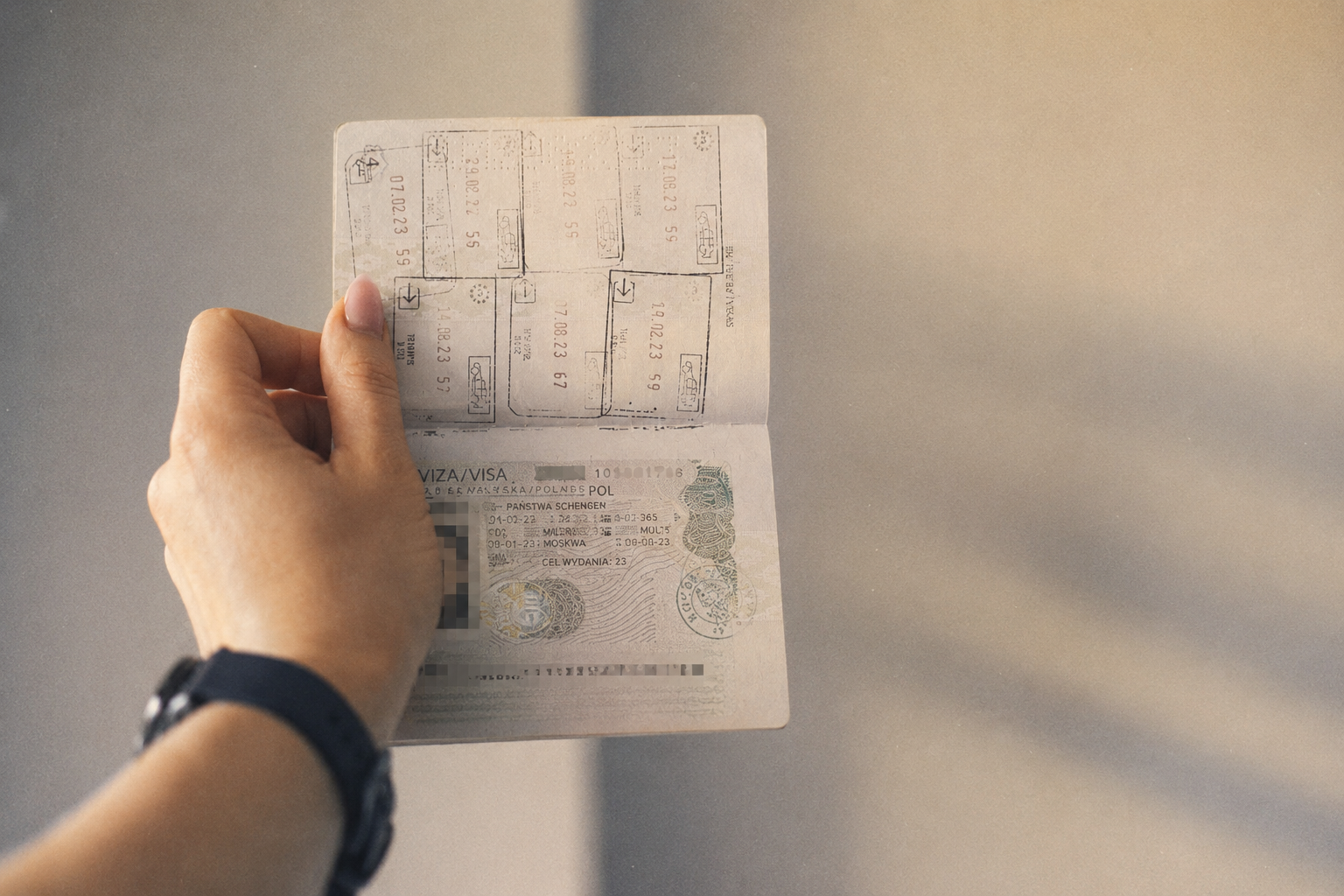
A Schengen visa application assessment is the review a consulate carries out before deciding whether to issue a short stay visa. Officers compare your travel plans, finances, supporting evidence and previous travel history rather than assessing each document separately. Once your application is accepted, a decision usually comes within 15 calendar days — though if the consulate needs to run extra checks, that can stretch to 45. And ticking every box on the requirements list doesn't automatically get you a visa. What actually swings the decision is whether the whole application tells one consistent story.
In this guide
- How the Process Works
- Choosing the Right Schengen Country
- What Consulates Check
- Assessing Your Travel Purpose
- Do the Documents Match
- Financial Assessment
- Medical Insurance
- Existing Residence Status
- Previous Travel History
- Background & Security Checks
- Airport Transit Visas
- Family Members of EU Citizens
- Visa Refusal
- Improving Your Chances
- FAQ
What Happens During the Schengen Visa Application Process?
Submitting your application doesn't mean it's assessed straight away. If you apply through a visa centre or another external service provider such as VFS Global, TLScontact or BLS International, your documents are first registered before they're passed to the responsible consulate. Applications can usually be submitted up to six months before travel, but no later than 15 days before your planned departure.
Before a visa officer reviews your travel plans, the consulate checks that the application is complete. The visa application form should be filled in correctly, the visa fee must be paid and you'll need to present a valid passport. For most applicants, the passport must have been issued within the previous 10 years and remain valid for at least three months after the planned departure from the Schengen area. Where required, applicants also provide biometric data during their visa appointment.
Only then does the assessment begin. The visa officer reviews your itinerary, finances and supporting documents together rather than in isolation. From the moment the application is accepted, the standard processing time is 15 calendar days, although additional checks may extend it to 45 days. If the application is approved, the consulate places a visa sticker in your passport showing the validity period, number of entries and other visa conditions.
Which Schengen Country Should You Apply for a Schengen Visa Through?
Choosing the wrong Schengen country can delay your application and, in some cases, even result in a refusal. That's because the consulate doesn't look at your itinerary in isolation. Flight reservations, hotel bookings, invitation letters and travel dates are all compared to see whether they point to the same destination. Documents pointing to another Schengen country as the main destination may lead the consulate to conclude that you've applied to the wrong authority.
This practice is known as visa shopping. Applying through a consulate simply because appointments are easier to get or processing appears faster can create unnecessary doubts, even when the trip itself is genuine.
What Do Consulates Actually Check?
Visa officers aren't trying to catch applicants out. Their job is to decide whether you meet the legal conditions to enter the Schengen area and whether the documents support the trip you've described. That's why your employment letter, bank statements and travel bookings are assessed together rather than separately.
A hotel reservation that doesn't match your itinerary or financial records that don't fit the rest of the application are often enough for the consulate to ask for clarification or additional documents before making a decision.
Every application is assessed under the Schengen Visa Code, which applies across all Schengen states. Although every member state follows the same rules, each application is assessed on its own facts. A small set of clear, relevant documents is often more persuasive than a thick file full of paperwork that repeats the same information or raises new questions.
Is Your Intended Visit Credible?
The consulate isn't trying to judge your intentions. Its job is to decide whether the documents you've submitted support the purpose of the trip you've described. Looking at one document in isolation rarely tells a visa officer very much.
The purpose of your trip determines the documents the consulate expects to see. Someone travelling for a holiday is expected to provide different evidence from someone travelling for business. A holiday usually means hotel bookings, a travel itinerary and proof of sufficient funds, while business travellers are more likely to submit a company invitation, conference registration or details of scheduled meetings. Applicants visiting family members are generally expected to provide an invitation together with evidence of the relationship. If the documents don't support the stated purpose of the trip, the consulate may ask for additional documents before making a decision.
| Purpose of Trip | Required Documents | Conditional (Situation-Dependent) |
|---|---|---|
| Tourism / Holiday | Hotel booking, travel itinerary, proof of sufficient funds | Return flight ticket, proof of employment |
| Business | Company invitation letter | Conference registration, meeting schedule |
| Visiting Family or Friends | Invitation letter + proof of relationship | Financial sponsorship evidence from the host |
Why Do Your Supporting Documents Need to Match?
Two applicants can submit exactly the same documents and receive different decisions. The difference usually isn't the number of documents. It's whether they all support the same version of the trip.
A visa officer will naturally compare the information across your application. Travel dates are expected to match your flight bookings and accommodation, while your employment letter should be consistent with your bank statements. For trips covering several Schengen states, the itinerary should also explain why the bookings are arranged the way they are.
What Happens If More Documents Are Needed?
A refusal usually isn't the first outcome. More often, the visa centre spots something missing at submission, or the consulate requests an additional document during the assessment. Either way, the application can't move forward until you provide it.
How you submit the document depends on the centre. Sometimes an email is enough, or you're asked to return the same day. But if you have to submit it at a separate visit, VFS Global charges a package transmission fee to accept documents outside your original appointment. So a follow-up request can cost both a new appointment and an extra fee, on top of the delay.
No document review can guarantee approval — the consulate decides. But checking your file with the xVisa Document Checker before you apply flags the gaps and inconsistencies that trigger these follow-up requests, so you're less likely to lose time and money to them.
How Are Your Finances Assessed?
Financial records help the consulate answer a practical question: can the trip realistically be paid for? The consulate isn't interested in your bank balance on its own. What matters is whether your finances make sense for the trip you've planned and show that you can cover the costs without relying on unauthorised work or public funds.
There's no fixed amount that guarantees approval. The level of funds expected depends on the member state, the length of your stay and, in some cases, the type of accommodation you've booked. Bank statements are assessed for more than the closing balance. Officers also look at how the money was accumulated, so regular salary payments usually carry more weight than a large deposit made shortly before the application.
If somebody else is paying for your trip, that should be clearly documented. The sponsor's financial evidence should show how the travel costs will be covered. Whatever the source of the funds, they should fit naturally with the rest of the application. Booking five-star hotels isn't a problem in itself. It only becomes one if the rest of the application suggests that the trip would be difficult to afford.
What Travel Insurance Do You Need for a Schengen Visa?
Medical insurance is one of the documents a consulate expects to see with a Schengen short stay visa application. The policy should remain valid for the entire trip, provide a minimum cover of €30,000 for emergency medical care, emergency hospital treatment and repatriation, and cover every Schengen country on your itinerary.
The dates and destinations on your insurance policy should match the rest of your application. If the policy expires before your planned return or doesn't cover the countries you're visiting, you'll usually be asked to provide an updated certificate before the assessment continues. Once the visa has been issued, visa holders should continue to travel with valid insurance for the entire period of their stay.
Can You Apply for a Schengen Visa with a UK Residence Permit?
Yes. A valid UK residence permit allows you to apply for a Schengen visa from the UK, but the consulate will also assess whether you have sufficient ties to return after your trip.
Every Schengen visa is issued on the understanding that the traveller will leave before the authorised stay ends. One of the questions a visa officer considers is whether you have convincing reasons to return after a temporary visit. For applicants planning to work, study long-term or settle in a Schengen country, a Schengen visa isn't usually the right option. In most cases, an appropriate national visa is required instead.
Stable employment, ongoing studies, business ownership, close family members, financial commitments or a residence permit allowing you to remain in the United Kingdom can all help support your application. Taken together, they help explain why you're expected to leave the Schengen area before your permitted stay ends.
Does Previous Travel History Matter?
Previous international travel is one of the factors considered during a Schengen visa application assessment, but it is never the deciding factor. Applicants who have previously travelled on a Schengen visa and complied with Schengen rules throughout their trip may find it easier to demonstrate a positive travel record.
First-time travellers shouldn't assume they're at a disadvantage. A well-prepared application with consistent documents and a credible travel plan usually carries more weight than previous travel history or the number of stamps in your passport.
How Do External Border Checks Affect Your Schengen Visa Assessment?
A Schengen visa assessment doesn't end with the documents you submit. Before reaching a decision, consulates also carry out background and security checks that support the management of the Schengen area's external borders. Reviewing your documents is only part of the process.
Your previous travel history may also be reviewed. If you've held a Schengen visa before, officers may check whether you used it in line with its conditions, respected the 180 day period and left the Schengen area before the visa expires. Since the introduction of the Entry/Exit System (EES), entries and exits have been recorded digitally, making this information easier to verify.
The consulate also checks European information systems used by member states to support border controls and security. They can also highlight previous immigration violations, problems with travel documents or other information that may require further review before a decision is made.
Do You Need an Airport Transit Visa to Enter the Schengen Area?
Not every traveller needs an airport transit visa to travel through the Schengen area. Depending on your nationality, you may need one if you're changing planes at a Schengen airport without entering the Schengen area. An airport transit visa allows you to remain only in the international transit area while waiting for a connecting flight and does not permit entry into the Schengen area.
Citizens of certain non-EU countries may need an airport transit visa even if they never leave the airport. There are, however, several exemptions. Travellers holding a valid residence permit issued by a Schengen state or another recognised country, as well as holders of certain valid visas, may not need one. Whether an airport transit visa is required depends on both your nationality and the documents you already hold.
Are Family Members of EU Citizens Assessed Differently?
Yes. Certain family members of EU citizens exercising free movement rights may benefit from an accelerated visa procedure. Under European legislation adopted by the European Parliament and implemented across the European Union, qualifying applicants often pay no visa fee and may also benefit from simplified documentary requirements.
That doesn't mean the visa is issued automatically. The consulate still has to check that you qualify for the simplified procedure.
You'll normally be asked to provide documents proving your relationship, such as a marriage or birth certificate, along with evidence that the EU citizen is travelling to or living in another Schengen country.
What Can Lead to a Visa Refusal?
A visa refusal doesn't always mean your travel plans are the problem. More often, it's the evidence behind them that falls short.
Some of the most common reasons include:
- incomplete or inconsistent supporting documents;
- insufficient financial evidence;
- doubts about the stated main destination country or travel itinerary;
- failure to demonstrate an intention to leave the Schengen area before the authorised stay ends;
- concerns arising from previous visa or immigration history.
False documents or information that cannot be verified are likely to result in a refusal of the new visa. Minor inconsistencies are different and can often be resolved by providing additional documents or clarification before a decision is made.
Can You Improve Your Chances of Approval?
A strong application starts long before you submit it. Careful preparation won't guarantee approval, but it can make the assessment much more straightforward.
Before you apply for a Schengen visa, check that your flights, accommodation, financial evidence and employment records all support the same travel plans. If you're submitting your documents through a visa centre, book your appointment well in advance. For non-EU nationals applying from the UK, appointments can be booked out two to four weeks ahead during busy travel periods, and applying early leaves more time if the consulate requests additional documents or carries out further checks.
Accurate and consistent information matters just as much. Even small inconsistencies can lead to additional questions, while clear, well-organised documents are usually much easier to assess.
Frequently Asked Questions
What happens if appointments are available sooner at another consulate?
You should still apply through the member state responsible for your main destination. Choosing another consulate simply because appointments are available sooner may raise questions about your travel plans.
Who is more likely to receive a multiple entry visa?
Applicants who can demonstrate a genuine need for repeated travel and a history of complying with previous visa conditions may be issued a multiple entry visa instead of a single entry visa.
Does visiting other Schengen states affect where I should apply?
Yes. You should apply through the member state that is your main destination, even if you also plan to visit other Schengen states during the same trip. Choosing another consulate simply because appointments are available sooner may raise questions about your travel plans.
How much does a Schengen visa application cost?
For most adults, the Schengen visa fee is €90. Children aged 6 to 11 usually pay €45, while children under 6 are generally exempt. Applications submitted through a visa centre may also be subject to a service fee, so the total cost in the UK can exceed £100.
Is the visa fee refunded if an application is refused?
No. Refusing an application doesn't entitle the applicant to a refund of the visa fee.
Final Thoughts
A Schengen visa assessment isn't based on any single document. Before making a decision, the consulate looks at your itinerary, finances and supporting documents together to see whether they support the trip you've described.
If you're applying for a Schengen visa from the UK, booking an appointment well in advance also leaves enough time to provide any additional documents or information the consulate may request before your planned departure.